The Right Age for a Facelift in 2026
If you've ever typed "am I too young for a facelift?" or "have I waited too long?" into a search bar at midnight, you're not alone. It's one of the most common questions we hear at our clinic, and honestly, it's one of the most misunderstood topics in aesthetic surgery. The short answer? There is no single "right" age. But there is a smarter time, and the science behind it might surprise you.
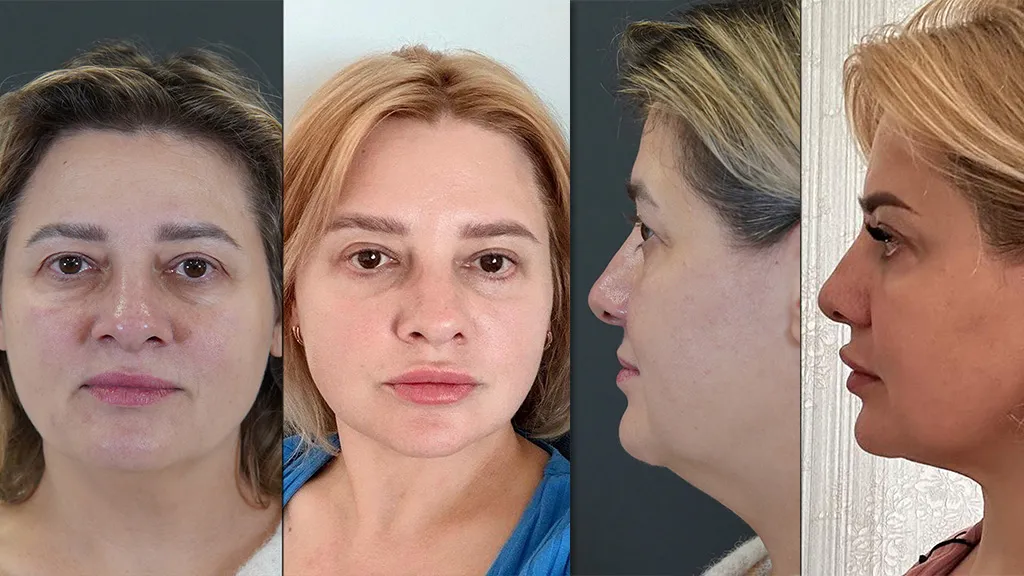
At Dr. Celal Alioglu's clinic in Istanbul, we don't plan surgery around your birthday. We plan it around your face, your skin quality, the depth of tissue laxity, your bone structure, and what you're actually hoping to achieve. Two patients can be the same age and be in completely different places in their facial aging journey.
That said, understanding the general timeline of how faces age can help you make a more informed, confident decision.
Many people assume a facelift is something for their 60s. But a growing number of patients, and surgeons, are rethinking that assumption.
In your 40s, the first real structural changes begin to show: early jowling, a softening of the jawline definition, and slight laxity in the neck. The skin still has good elasticity, the deeper tissues are resilient, and the body heals beautifully. Patients who choose facial rejuvenation in their forties often benefit from longer-lasting results, since younger facial tissues are more robust and respond better to surgical adjustments.
This is also the decade where many patients have already spent thousands on non-surgical treatments, fillers, Botox, threads, trying to "buy time." There's nothing wrong with that approach, but at some point, surgery does what injectables simply cannot: it addresses the deeper structural layers of the face.
The majority of facelift patients are in their early-to-mid 50s, and for good reason. By this stage, the signs of aging are meaningful enough to warrant surgery, but tissue quality is still strong enough to deliver beautiful, natural-looking results.
Here's where the research gets interesting. A published 30-year study by Dr. Andrew Frankel found that patients who underwent deep plane facelifts returned for revision surgery after an average of 10.9 years, but patients who had their surgery at age 53 or younger saw results lasting an average of 12.4 years. That's a meaningful difference, and it makes a compelling case for not waiting too long.
As researchers have noted, the facial aging that occurs between 50 and 60 is dramatically more significant than the same decade between 40 and 50, which means every year of waiting in your early 50s carries more weight than it might seem.
A facelift in your 60s or even 70s is absolutely achievable and can deliver life-changing results. The expectations and surgical approach simply need to be tailored accordingly. Skin elasticity and tissue recovery differ, and the planning process becomes even more important. The goal at this stage is refreshment and restoration, turning back the clock without erasing the character of your face.
Age is only one piece of the puzzle. The technique matters enormously. Studies consistently show that deep plane facelift approaches, which involve full mobilization of the deeper SMAS layer, produce measurably longer-lasting results compared to more superficial techniques. At our clinic, we focus on releasing and lifting the deeper structural layers of the face, which creates results that move naturally, feel natural, and stand the test of time.
Lifestyle factors play a role too, sun protection, not smoking, and skin quality maintenance all extend the longevity of your result significantly.
Stop asking "am I old enough?" and start asking "is now the right time for me?" The best facelift candidate isn't defined by age, they're defined by realistic goals, good general health, and a face that is ready for structural rejuvenation.
If you've been thinking about it, the conversation is always worth starting sooner rather than later.
Most patients who undergo facelift surgery in Turkey are in their late 40s to mid-50s, but there is no single ideal age. Candidacy for facial rejuvenation is based on your individual facial anatomy, tissue quality, and aesthetic goals, not a number on your ID.
Yes, when performed using deep structural techniques that lift the underlying SMAS tissue layers rather than just pulling the skin, results look refreshed and natural, never "done." The goal of a professional plastic surgeon is always to restore facial harmony, not to change who you are.
Based on published plastic surgery research, the average deep plane facelift result lasts approximately 10 to 12 years before patients seek refinement, and those who undergo anti-aging surgery earlier in life tend to enjoy longer-lasting outcomes.
The research suggests that earlier is generally better in terms of result longevity and tissue response. However, aesthetic surgery should only be performed when there is a genuine structural indication, not purely as a preventative measure against aging.
Yes, and it's very common. A facelift is frequently combined with a neck lift, upper or lower blepharoplasty (eyelid surgery), or fat grafting to achieve comprehensive facial rejuvenation in a single session. Dr. Celal Alioglu will assess which combination makes the most sense for your specific anatomy to achieve the best aesthetic results.
Have a question about your own case? Contact our team or send your details through the online medical form for a personal evaluation by Dr. Celal Alioğlu.

Dr. Celal Alioğlu is a European Board Certified (FEBOPRAS) plastic, reconstructive and aesthetic surgeon in Istanbul with more than 15 years of experience. He trained in plastic surgery at Istanbul Kartal Dr. Lütfi Kırdar Training and Research Hospital and is a member of ISAPS, the American Society of Plastic Surgeons, The Aesthetic Society and the Rhinoplasty Society of Europe.
His main focus is rhinoplasty, including revision, ethnic and piezo rhinoplasty, along with breast surgery and facial rejuvenation. Dr. Alioğlu does every consultation and operation himself, and most of his patients travel to Istanbul from abroad.
More About Dr. Celal +